
When choosing an 800cc vs 1000cc Gasoline UTV, many users struggle with the core question of matching engine displacement to daily farm work and outdoor adventures.
Gasoline UTV (side-by-side all-terrain vehicle) has become an indispensable practical equipment in daily farm work, outdoor cross-country crossing, mountain hunting and other scenarios.Many users struggle with the core question when shopping: 800cc displacement or 1000cc displacement UTV?
Each of the two mainstream displacement models has its own advantages, adapting to different operating intensities, off-road scenarios, terrain environments and budget requirements.800cc is mainly balanced, flexible, fuel-efficient and durable, suitable for light and moderate daily use; 1000cc is mainly powerful, heavy-duty capacity, suitable for high-intensity operation and extreme off-road.
This article will comprehensively compare 800cc and 1000cc gasoline UTV from engine principle, core performance, farm operation, off-road experience, vehicle cost, purchase error and other dimensions, so as to help you accurately match the model suitable for yourself and avoid the problem of buying big waste and buying small and insufficient.
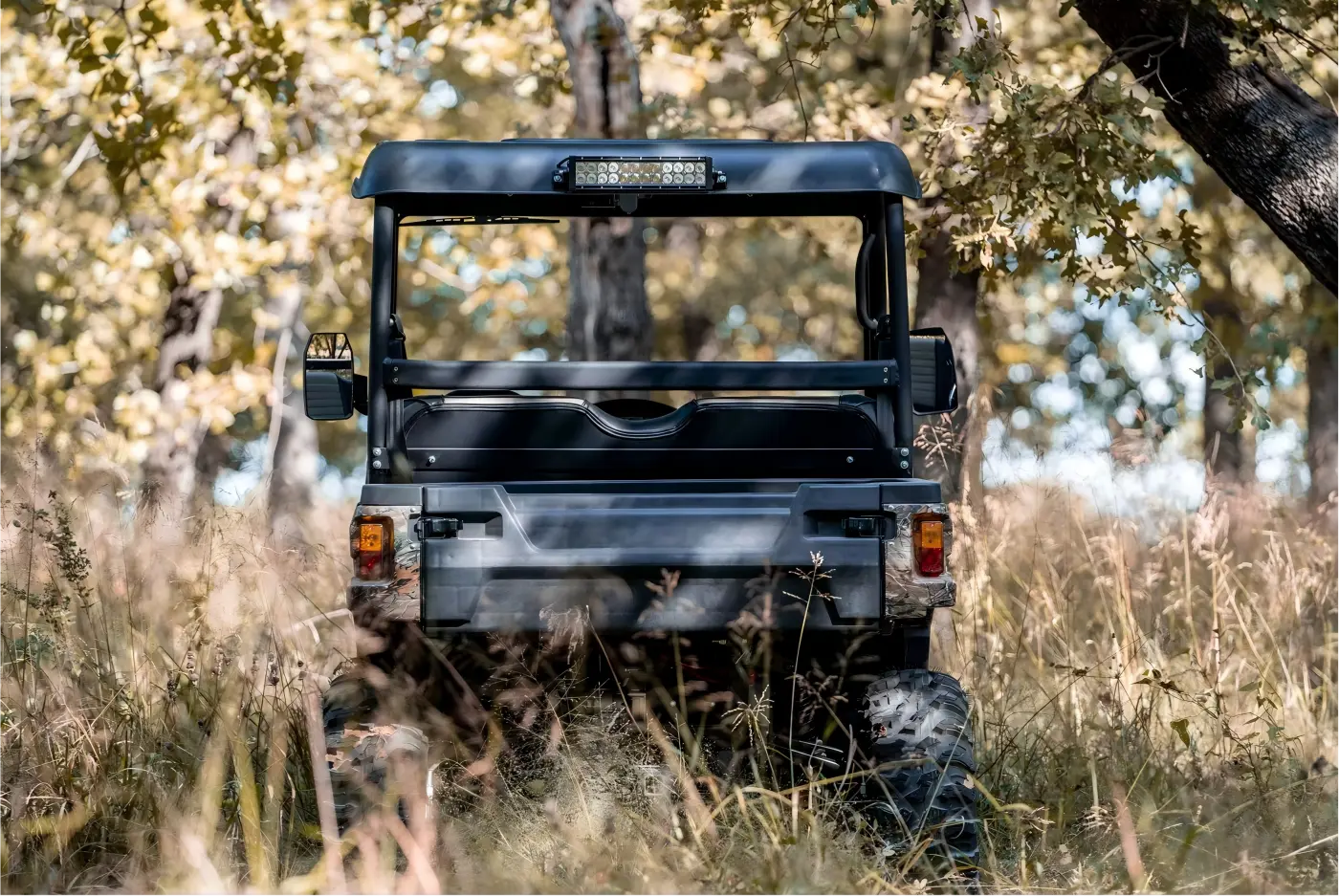
UTV displacement base: What do 800cc and 1000cc represent?
Many novice car owners only know that “the greater the displacement, the stronger the power”, but they do not know the actual meaning of the cc value.In UTV models, cc is an abbreviation for cubic centimeter, which represents engine displacement, that is, the total volume of reciprocating motion of the cylinder piston.
Engine displacement is the core basic parameter that determines vehicle power, torque and load capacity.In general, the larger the displacement, the more intake and fuel injection the engine can deliver, and the higher the horsepower and torque.However, the final dynamic performance will also be affected by factors such as engine structure, adjustment, fuel supply method, body weight, etc.
At present, the mainstream 800cc UTV on the market is mostly equipped with V-type two-cylinder engine, and the power output is stable and balanced.The regular horsepower range is 55-65HP, and the torque performance is moderate, perfect for light and moderate load, traction and off-road scenarios.
The 1000cc UTV engine configuration is more abundant, including V-type two-cylinder, in-line two-cylinder and even three-cylinder structure.The power parameters are greatly improved, the horsepower can reach 65-110HP, the torque performance is especially excellent at low and medium speeds, and the peak torque is generally above 80-100Nm.
Simply put, 800cc is a “balanced and practical” power, giving consideration to fuel economy and flexibility; 1000cc is a “hard core heavy load” power, focusing on ultimate bearing capacity and explosive force. The actual use gap between the two will be intuitively reflected in load, climbing, fuel consumption and maneuverability.
All-round comparison of core performance: 800cc vs 1000cc
In order to let you visually see the gap between the two displacement models, we combine the parameters of mainstream brands such as Spring Wind, Polaris, Bombardier, Honda and Yamaha to sort out all-round performance comparison, covering core dimensions such as power, load, fuel consumption, control and price.
Feature | 800cc UTV | 1000cc UTV | Edge Goes To |
Horsepower | 55–65 HP | 65–110+ HP | 1000cc |
Torque | Moderate (strong for size) | Higher low-to-mid range (80–100+ Nm) | 1000cc |
Acceleration & Pulling | Good for light-moderate loads | Excellent under heavy load or steep hills | 1000cc |
Top Speed | Adequate (typically 50–65+ mph) | Higher, with better sustained power | 1000cc |
Towing Capacity | 1,200–1,500 lbs typical | 2,000–2,500+ lbs common | 1000cc |
Payload Capacity | 600–1,000 lbs | 1,000+ lbs | 1000cc |
Fuel Economy | Better (lighter engine) | Slightly lower, especially when loaded | 800cc |
Dry Weight | Lighter (easier on trails) | Heavier (more stable when loaded) | 800cc (agility) / 1000cc (stability) |
performance, low entry threshold Higher configuration, higher vehicle price 800cc From the core parameters, it can be clearly seen that 1000cc UTV leads in power, load, traction and extreme performance.The core advantages of the 800cc UTV focus on fuel consumption, flexibility and car purchase cost, making it an extremely cost-effective entry and daily car choice.
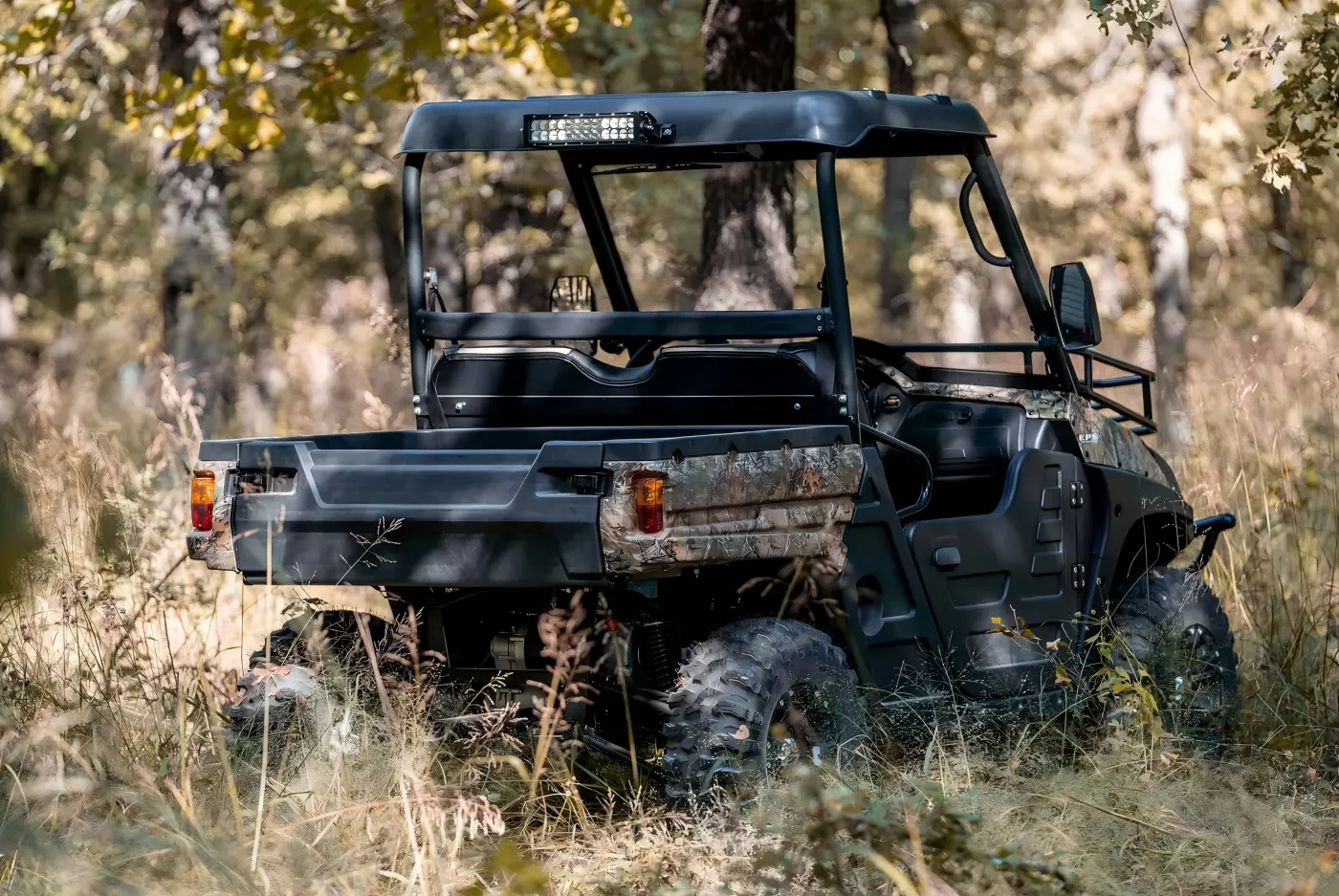
Farm operation scenario adaptation: how to choose different cultivated land scales?
UTV is the core auxiliary equipment of modern farm, which can complete all kinds of daily work such as material transportation, farm tool traction, field inspection, fence repair, pesticide spraying, etc.Different farm sizes and operation intensities, the suitable models are completely different.
3.1 800cc UTV: Best choice for small and medium farms
The 800cc model is specially designed for light and medium farm operations, with moderate and stable power output. It is fully suitable for the daily operation and maintenance of 100-150 mu small and medium-sized farms, family farms, orchards and tea gardens.
With a towing weight of up to 1500 pounds, it can easily tow small sprayers, material trailers, fence construction equipment, and meet the daily transportation needs of feed, agricultural tools, and building materials.
The advantages of lightweight body make it flexible in narrow orchard row spacing, low barn passage and field path, light steering, low operating threshold and not easy to fatigue for long time operation.
At the same time, lower fuel consumption can significantly reduce the long-term operating costs of the farm.For farmers who only need daily inspection, light transportation and scattered maintenance, 800cc will not have excess power and waste of resources.
3.2 1000cc UTV: large farms, large-scale pastures just needed
If your farm is over 200 acres and requires heavy frequency haulage, long haul haulage of large farm implements, or frequent work in steep, muddy fields, 1000cc UTV is just what you need.
2000-2500 The super traction capacity of pounds can easily pull large hay trailers, fertilizer equipment and agricultural machinery. The cargo load of more than 1000 pounds can complete a large amount of material transfer at one time, greatly reducing the number of round trips and improving the operation efficiency.
The low-torque performance of this model is excellent, climbing under full load, over muddy potholes will not appear weak power, flameout stuck problems.The high-strength body structure can also adapt to all-weather, high-load continuous operation.
Many high-end 1000cc UTVs are also equipped with hydraulic dump boxes, original four-wheel drive systems, and enclosed cabs (with air conditioning/heating) to further adapt to the specialized operating needs of large-scale farms.
Cross-country cycling scene adaptation: leisure crossing vs extreme adventure
In addition to agricultural operations, UTV is also a popular model for outdoor off-road, mountain hunting and short-distance travel.The off-road characteristics of 800cc and 1000cc are obviously different, adapting to different riding scenarios and road conditions.
4.1 800cc UTV: narrow road, complex forest road leisure off-road
The core off-road advantages of the 800cc model are lightweight and flexibility, more compact body size and smaller turning radius, ideal for narrow monorail forest roads, gravel roads, winding mountain roads and other technical road conditions.
When crossing rocky roads and dense forests, the lightweight body can accurately control the driving track, which is not easy to scratch and trap cars. Novices can also quickly control them.
The standard independent suspension with 10-12 inch ground clearance and 26-28 inch all-terrain tires is enough to meet the needs of daily off-road, mountain hunting and light crossing.
At the same time, it has lower fuel consumption and longer battery life. It is suitable for all-day stress-free leisure riding without frequent refueling, taking into account both fun and practicality.
4.2 1000cc UTV: high-speed off-road, extreme road exploration
1000cc UTV focuses on high-performance off-road, strong power reserve, can easily deal with steep slope climbing, desert slope, deep mud escape, high-speed crossing and other high-intensity scenes.
The high-equipped models have 12-17 inches of ultra-high ground clearance, long-stroke adjustable shock absorption, front and rear differential locks, and far more passability and stability than 800cc models, making them more confident in the face of complex extreme road conditions.
When multiplayer teams are cross-country, long-distance exploration, and hunting with full equipment, the weight and power advantages of 1000cc will be completely highlighted.Even when fully loaded with personnel and materials, it can still maintain sufficient power and there will be no shortage of power.
The only short board is the 800cc model, which is heavier in body, wider in size, less flexible in extremely narrow forest roads and less delicate in operation than lightweight.
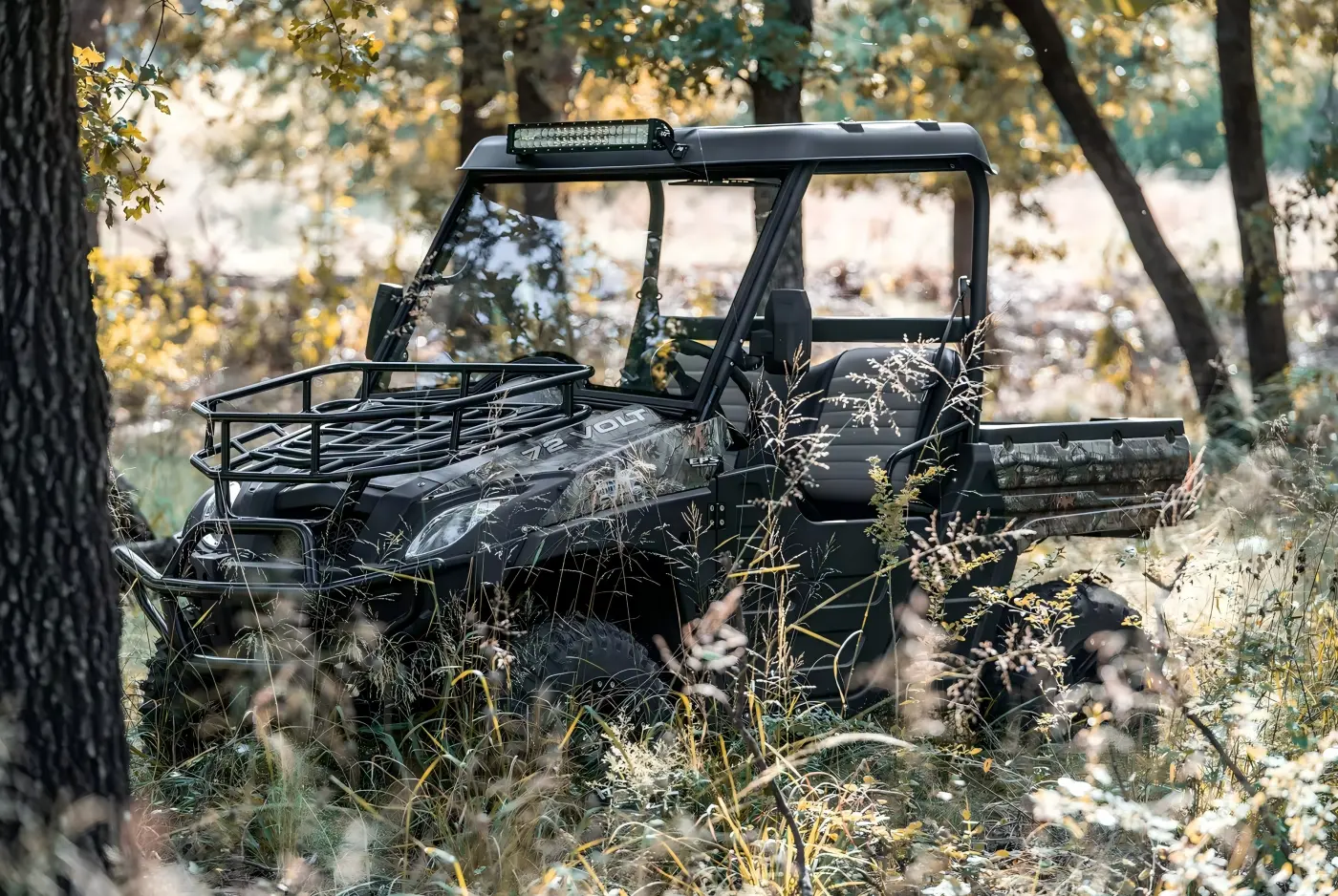
Comparison of vehicle cost: Is the difference worth it?
The core reason why many users struggle with displacement is the cost difference.The purchase price of 1000cc UTV is higher, and the cost performance of 800cc UTV is more outstanding. We disassemble it in detail from the full-cycle vehicle cost.
5.1 The cost of buying a car
The price of 800cc basic UTV is mostly concentrated in $13,000 – 20,000, and the price of fully equipped high-end models is relatively close to the people, making it the first choice for users with limited budget.
The overall premium of 1000cc model is obvious, which is generally $4000 -10000 more expensive than 800cc with the same configuration. The high-end version with cab, four-wheel drive and upgraded shock absorption can exceed $30,000, and the entry threshold is higher.
5.2 Long-term use costs
In terms of fuel cost, the 800cc small displacement engine has smaller weight, milder working conditions, and significantly lower fuel consumption for daily light load operation and leisure riding.Long-term high-frequency use, can save a lot of fuel costs.
The fuel consumption of 1000cc model will obviously increase when it is heavily loaded, climbing and extreme off-road. The fuel consumption difference is relatively small under normal operating conditions, but the fuel cost is still higher than 800cc after being used all year round.
In terms of maintenance, the price difference between the conventional maintenance accessories (oil, filter, belt) of the two models is not large.However, the structure of 1000cc engine is more complicated, and after high-intensity use, the cost of later maintenance and replacement of accessories is slightly higher.
In addition, the insurance and annual inspection registration fees of 1000cc models will be slightly higher than those of 800cc models due to higher vehicle prices.
5.3 Cost performance and return cycle
For small and medium-sized farms and occasional off-road users, 800cc is enough to cover 90% of the use scenarios, without excessive cost and full cost performance.
Large-scale farms, high-frequency and heavy-duty operations, heavy off-road players, 1000cc efficiency improvement, stability advantage, lower failure rate, can wipe out the difference between car purchases within 2-4 years, long-term use is more cost-effective.
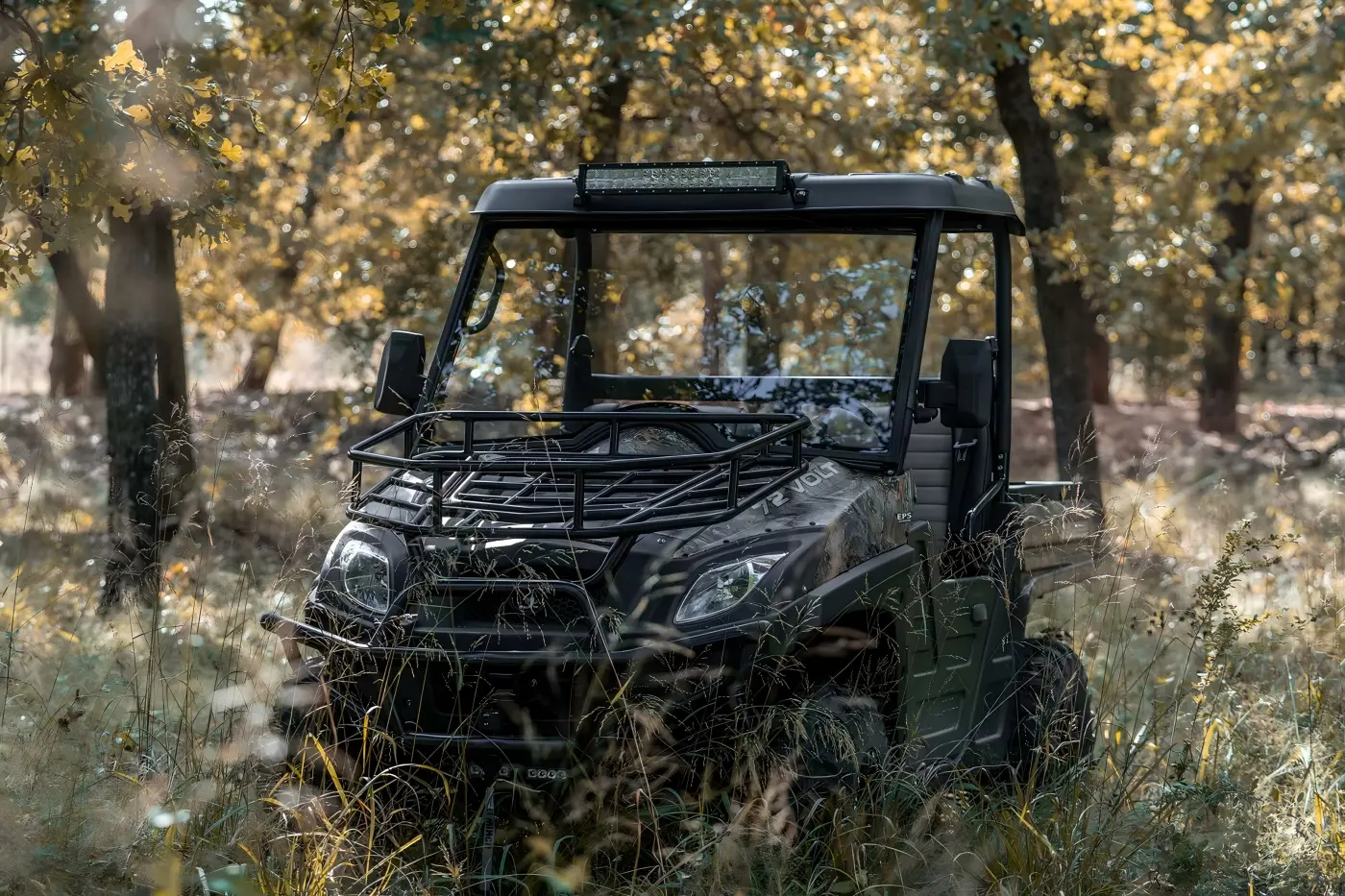
car selection high frequency error: 90% of users will step on the pit
Many users only look at the displacement and horsepower parameters when choosing a car, ignoring the actual use scenario, and finally the problem of “large displacement waste, small displacement is not enough” appears.Here are five high-frequency purchase errors sorted out to help everyone avoid pits accurately.
6.1 Blind pursuit of large displacement
Many novices think that the larger the displacement, the better, but do not know that daily only light farm work, leisure riding, 1000cc power completely surplus, not only spend more car purchase costs, long-term fuel consumption and maintenance costs are also higher.
6.2 Empty car test drive judgment performance
Most models have little power difference under empty state, but when full load, traction and climbing, the power difference between 800cc and 1000cc will be infinitely enlarged, so it is necessary to test drive with full load.
6.3 only look at parameters ignore body size
1000cc power is strong, but the body is wider and heavier, narrow orchards, small barn simply can not flexibly pass, practicality greatly reduced.
6.4 Neglecting long-term use needs
Many small-scale farms in the early stage will expand and increase the operation volume in the later stage. After starting 800cc, there will be insufficient power in just one or two years, and it is necessary to change vehicles, which will increase the cost instead.
6.5 Look only at the displacement and ignore the core configuration
At the same displacement, the configuration gap of four-wheel drive system, differential lock, shock absorber and dump box far affects the use experience more than the weak displacement gap.The practicality of the low 1000cc may not be as good as the high 800cc.
The final purchase advice: precisely match your needs
7.1 Priority is given to the 800cc gasoline UTV crowd
Farmers who own small and medium-sized farms within 150 mu and only do field inspection, light material transportation and scattered farm tools traction.
Outdoor enthusiast who enjoys mountain recreation, novice off-road, short hunting, often driving in narrow forest roads and winding trails.
Users with limited budget, pursuing high cost performance, hoping to reduce long-term fuel consumption and maintenance costs, and taking into account farm work and leisure.
7.2 Priority is given to 1000cc gasoline UTV crowd
More than 200 mu large-scale farms, large-scale pastures, high-frequency heavy-duty transportation, traction of large-scale agricultural equipment professional users.
Heavy players who often cross country on extreme road conditions such as steep slopes, mud, desert, rocks, etc., and team up for long-distance exploration.
Pursue vehicle stability and durability, hope that the vehicle model can adapt to future site expansion and operation increment, and realize users who buy cars in one step.
Conclusion:There is no best displacement, only the most suitable choice
There is no absolute advantage or disadvantage between 800cc and 1000cc gasoline UTV. The core lies in whether it matches its own use scenario.800cc wins in balance, fuel economy, flexibility, high cost performance, is the first choice for ordinary family farmers and leisure players.
1000cc wins in power, load, limit performance and stability. It is a just-needed model for large-scale agriculture and heavy off-road scenes. Its long-term use practicality and preservation rate are better.
Don’t blindly follow the trend when purchasing, combine your own farm scale, daily load, road condition environment, budget and long-term planning options, and pay attention to four-wheel drive, suspension, cargo box and safety configuration at the same time, so as to choose the most suitable all-round UTV model.