Nowadays, whether in tourist attractions, resorts, high-end residential communities, industrial parks, or mountain forest parks, electric golf carts electric golf carts and sightseeing cars sightseeing cars can be seen everywhere. They are no longer just dedicated vehicles for playing golf; they are fully relied upon for daily passenger transportation, patrolling, and short-distance commuting.
When choosing this type of vehicle, what many people care about most is not the aesthetics or speed, but rather its ability to climb slopes, whether it will roll back when parked on a steep incline, and if it can remain stable on complex terrains. After all, most venues feature undulating ramps and steep mountain roads. The climbing performance and safety of a vehicle directly determine the daily user experience.
We specifically utilized a professional test ramp to conduct a full suit of steep slope tests on the latest electric utility vehicles electric utility vehicles. From actual climbing performance and anti-rollback effectiveness to the adaptation scenarios of different motors and tires, we will explain everything thoroughly at once, making it easy to understand for both average users and procurement managers.
I. On-Site In-Slope Testing: Full Load Climbing Without Power Loss, Extremely Stable Ride
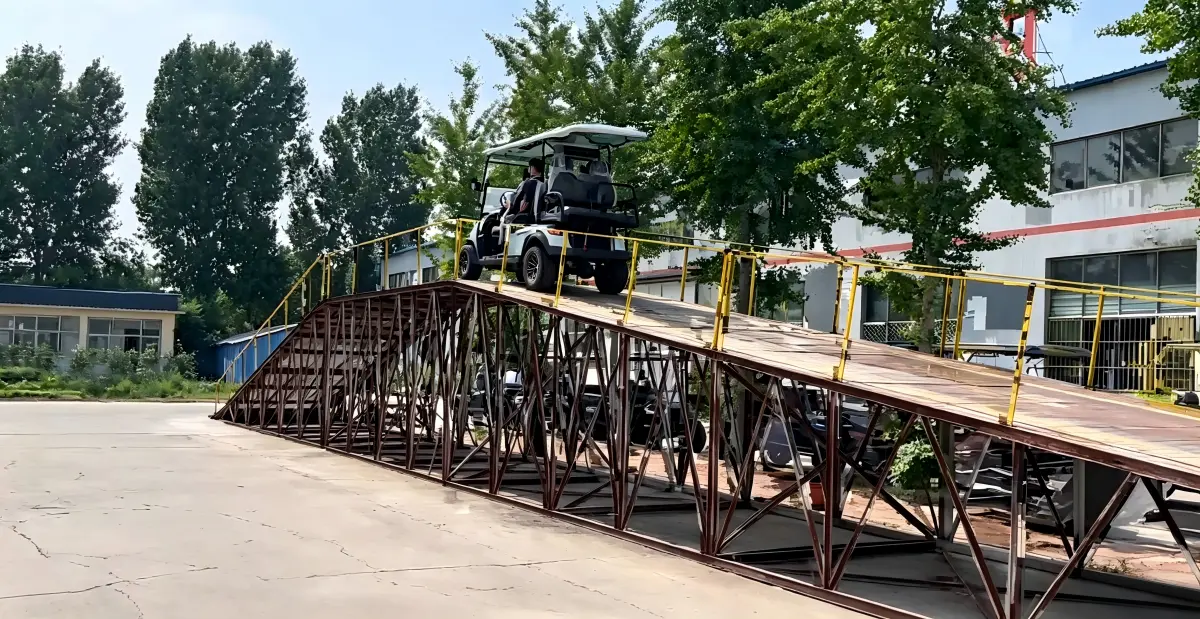
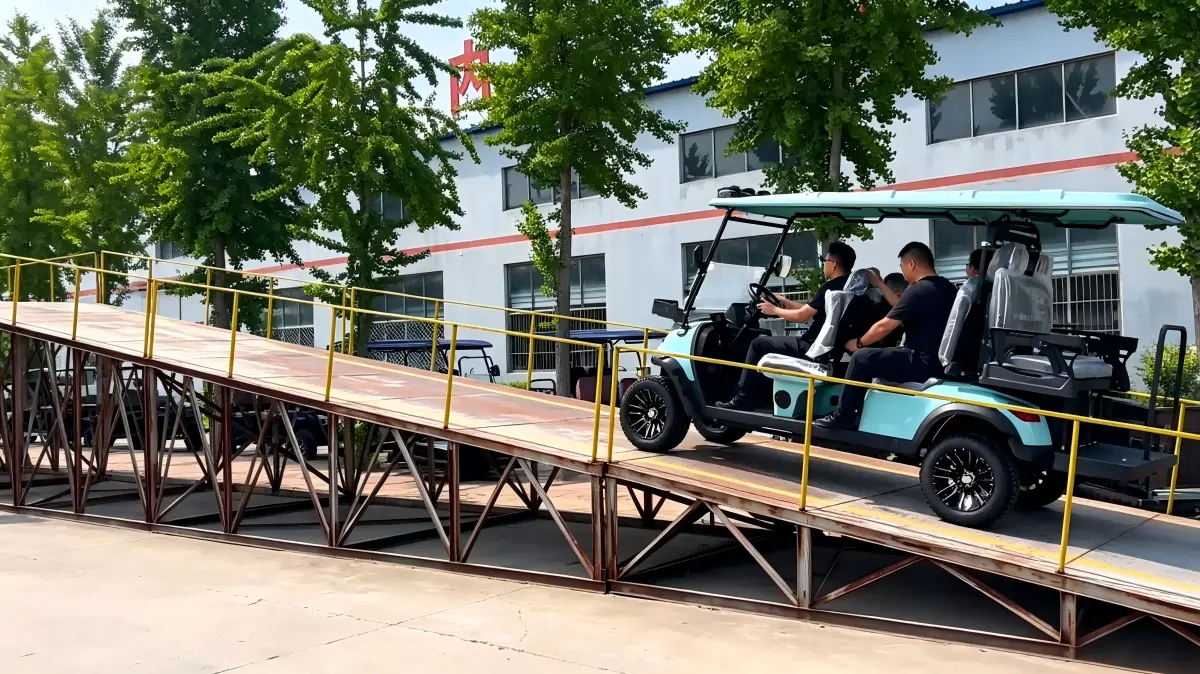
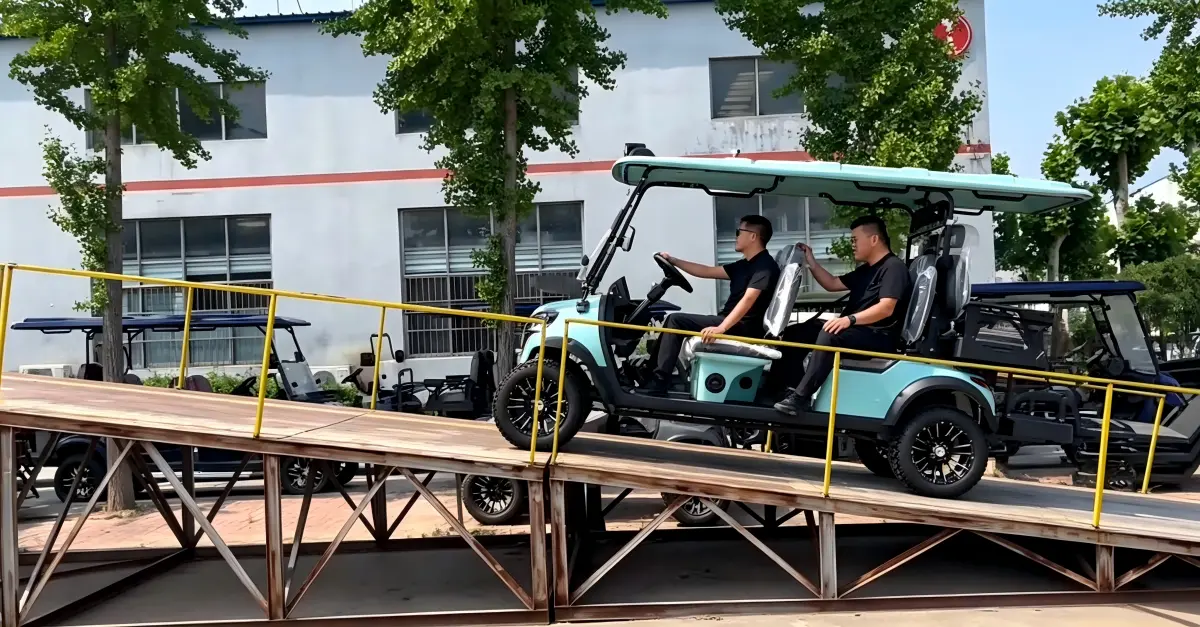
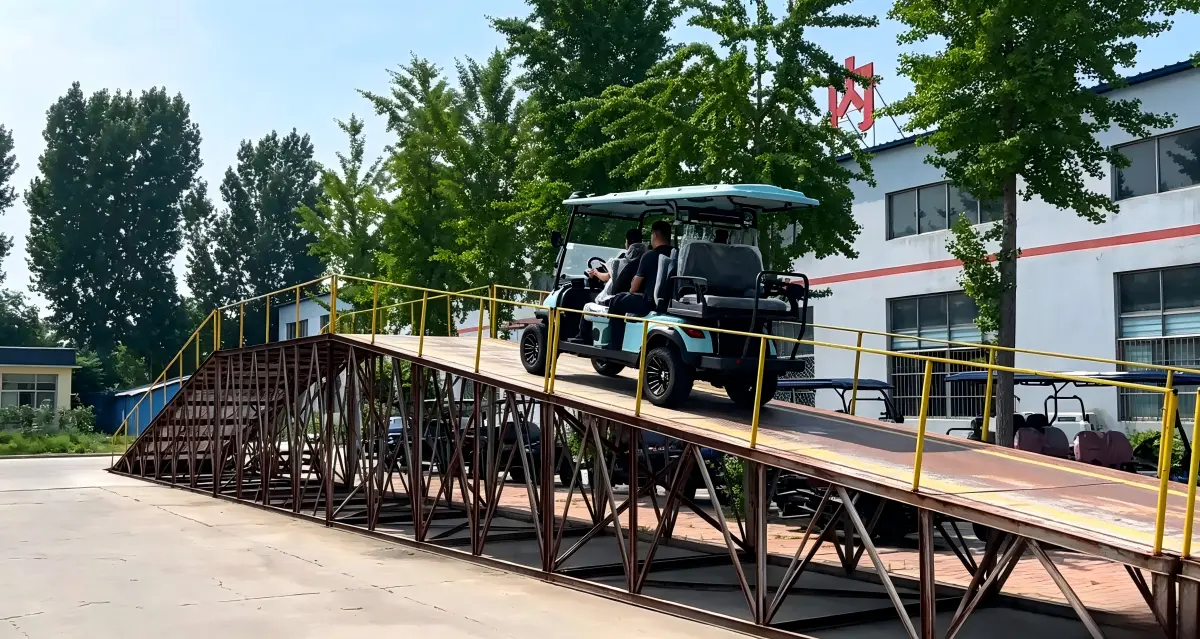
This test utilized a professional, two-way steep slope testing ramp. With a large drop in elevation and high surface friction, it perfectly replicates high-frequency, complex daily scenarios such as scenic mountain roads, residential underground garage ramps, and undulating park pathways, ensuring the test results fully align with real-world vehicle use (as demonstrated during the test drives in 01.png and 04.png).
Real Climbing Driving Experience
During the test, we fully loaded the vehicle with multiple adults to simulate a daily full-capacity passenger scenario. The process of the vehicle transitioning from flat ground onto the ramp was extremely smooth. The front end and chassis showed no signs of scraping or bumping, demonstrating excellent clearance and approach angles.
Many ordinary, low-end sightseeing cars suffer from reduced power, body shaking, and loud motor humming or abnormal noises as soon as they encounter a steep incline, making the climb stressful and unsafe. However, this vehicle showed none of these issues throughout the entire process. It possessed abundant climbing power and maintained a uniform speed all the way up without fluctuating.
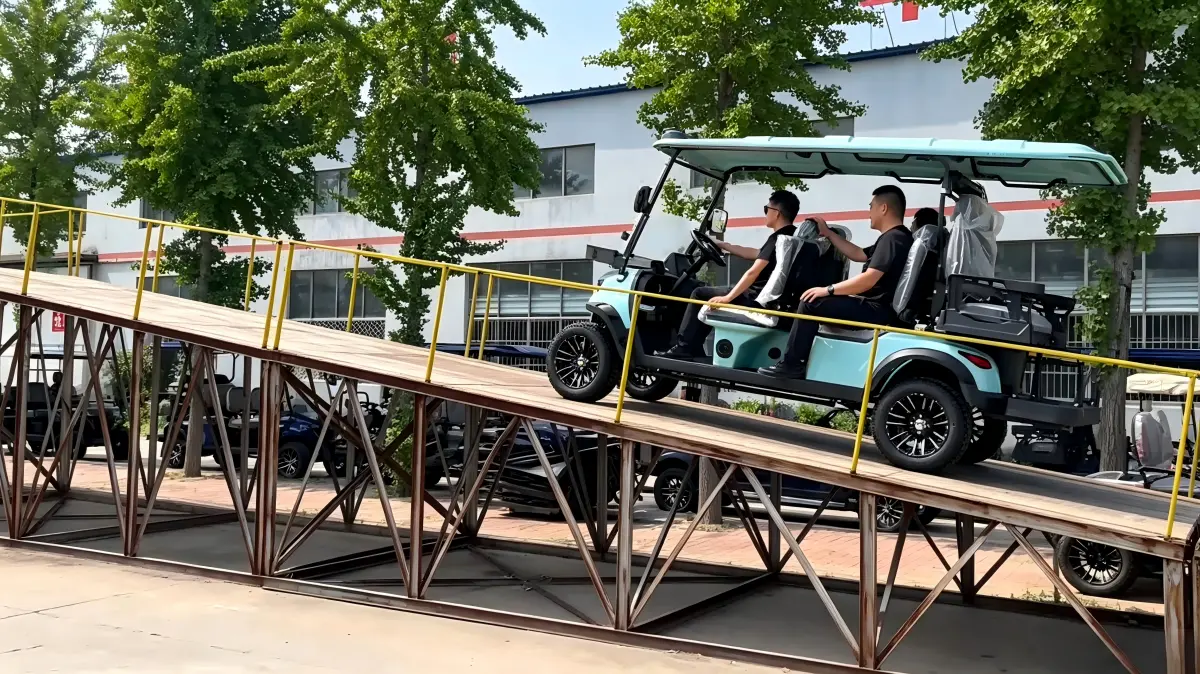
Even when reaching the steepest section near the top of the ramp (as captured in 02.png, 03.png, and 05.png), the four wheels remained firmly planted on the ground with solid grip. The power output stayed continuously smooth without any stuttering, slipping, or power lag, delivering a particularly solid and stable overall ride quality.
II. No Rolling Back on Steep Slopes! Even Novice Drivers Can Drive with Confidence
Being able to climb up is just the foundation; being able to stop firmly on a steep slope and restart without rolling back is the most critical safety assurance. The biggest worry for many users is temporarily parking on a steep incline and having the vehicle roll backward upon restarting, which can easily cause fender benders or safety accidents.
This model is equipped with a highly practical slope anti-rollback function, perfectly solving the pain points of steep slope parking and starting. It offers complete peace of mind whether for novice drivers or scenic area operations requiring frequent stops and starts.
Anti-Rollback Principle Layman’s Version
Without using complex technical jargon, it simply means the vehicle comes with an intelligent sensing system: When the vehicle comes to a complete stop on a steep slope and the driver releases the accelerator, the car instantly senses the slope angle and backward trend. It immediately and automatically locks the vehicle body. Without stepping on the brake or pulling the handbrake, the car will stay firmly parked on the slope without sliding back even a single millimeter.
When stepping on the accelerator again to restart, the system matches the power output accordingly. Only when the power is sufficient to drive the vehicle forward up the slope will it release the lock status. The startup is smooth and natural, without any sudden jerking or mechanical noises.
Real Test Results
We repeatedly conducted multiple mid-slope stopping and restarting tests at the steepest position of the ramp. Whether the vehicle was fully loaded with multiple people or driving empty, the results were identical: parking was as stable as on flat ground, with absolutely zero rollback.
The startup process was smooth and natural, without any sudden lunging forward or rolling backward due to insufficient power. This is particularly suitable for usage scenarios like tourist attractions and residential communities that require frequent slope stops and starts, maximizing safety.
III. How to Choose Between 4KW, 5KW, and 7.5KW Motors? Read This to Avoid Pitfalls
Many people struggle with choosing the right motor power when buying a vehicle, worrying that high power is a waste of money while low power won’t be enough. In fact, the three motor options each have their own adapted scenarios. Selecting based on your needs ensures you won’t make a mistake—there’s no need to blindly choose the top spec, nor compromise with a low spec just to save money.
Buyer’s Tip: For 90% of flat ground or ordinary undulating venues, choosing a 4KW motor is completely sufficient, offering the highest cost-effectiveness and best energy savings. If your venue features many mountain roads, steep slopes, uneven surfaces, or frequently carries full passenger loads, go straight for the 7.5KW option. It provides ample power and prevents the motor from working under chronic overload, making it more durable.
IV. Detailed Explanation of Three Tire Types! Choose the Right Tires for Stabler Climbing
The motor determines the amount of power output, but the tires determine whether that power can actually be utilized. Whether the climb is stable or prone to slipping depends entirely on the tires. This vehicle can be paired with three commonly used tire types to adapt to different surfaces, allowing precise customization for your specific use case.
1. Street and Turf Tires
The tread pattern is fine, shallow, and soft, with an overall design focused on comfort and wear resistance. When driving on concrete, asphalt, or golf course turf, the road noise is extremely low, the ride is smooth, and it will not damage the lawn, maintaining high turf integrity.
Disadvantage: The shallow pattern offers limited grip. It can easily slip when encountering wet, steep slopes, mud, or sand, making it suitable only for clean, flat paved surfaces and lawns.
2. All-Terrain Versatile Tires Highly Recommended
This is the ultimate all-rounder option and the top choice for most users. The tread pattern is deeper and the blocks are larger than those of street tires, while still retaining comfortable and quiet ride characteristics. It is neither noisy nor bumpy on paved roads, yet when transitioning to gravel paths, leaf-covered slopes, or stone slate walkways in scenic areas, it grips the ground firmly without slipping easily. It perfectly balances comfort and off-road capability, making it suitable for the vast majority of attractions and resorts.
3. Off-Road Dedicated Tires
Specially built for harsh road conditions, these feature wide, deep tread blocks and thickened, wear-resistant sidewalls, maximizing mud clearing, anti-slip, and gripping capabilities. They are the perfect match for the 7.5KW high-power motor. Vehicles equipped with these can steadily pass through rocky roads, muddy inclines, and pothole-ridden mountain paths without slipping or getting stuck.
Disadvantage: The main downside is that road noise is quite noticeable when driving on flat paved roads, and the higher rolling resistance will slightly impact the driving range. It is not suitable for purely flat, daily short-distance commuting.