Electric UTV vs Gas Powered UTV: The Ultimate Selection Guide for Farm & Off-Road Fleet Procurement
In the core markets of all-terrain vehicles—North America and Europe—farmers, hunters, forestry managers, and industrial park operators face an era-defining decision when procuring vehicles: should they opt for the rapidly evolving Electric UTV or stick with the powerful, traditional Gas Powered UTV?
As a professional manufacturer and exporter of all-terrain vehicles, GreatWork provides an in-depth analysis of the core differences, commercial value, and future market trends of these two drivetrain architectures in real-world Euro and US operating scenarios, helping B2B buyers and fleet managers make decisions that maximize their Return on Investment (ROI).
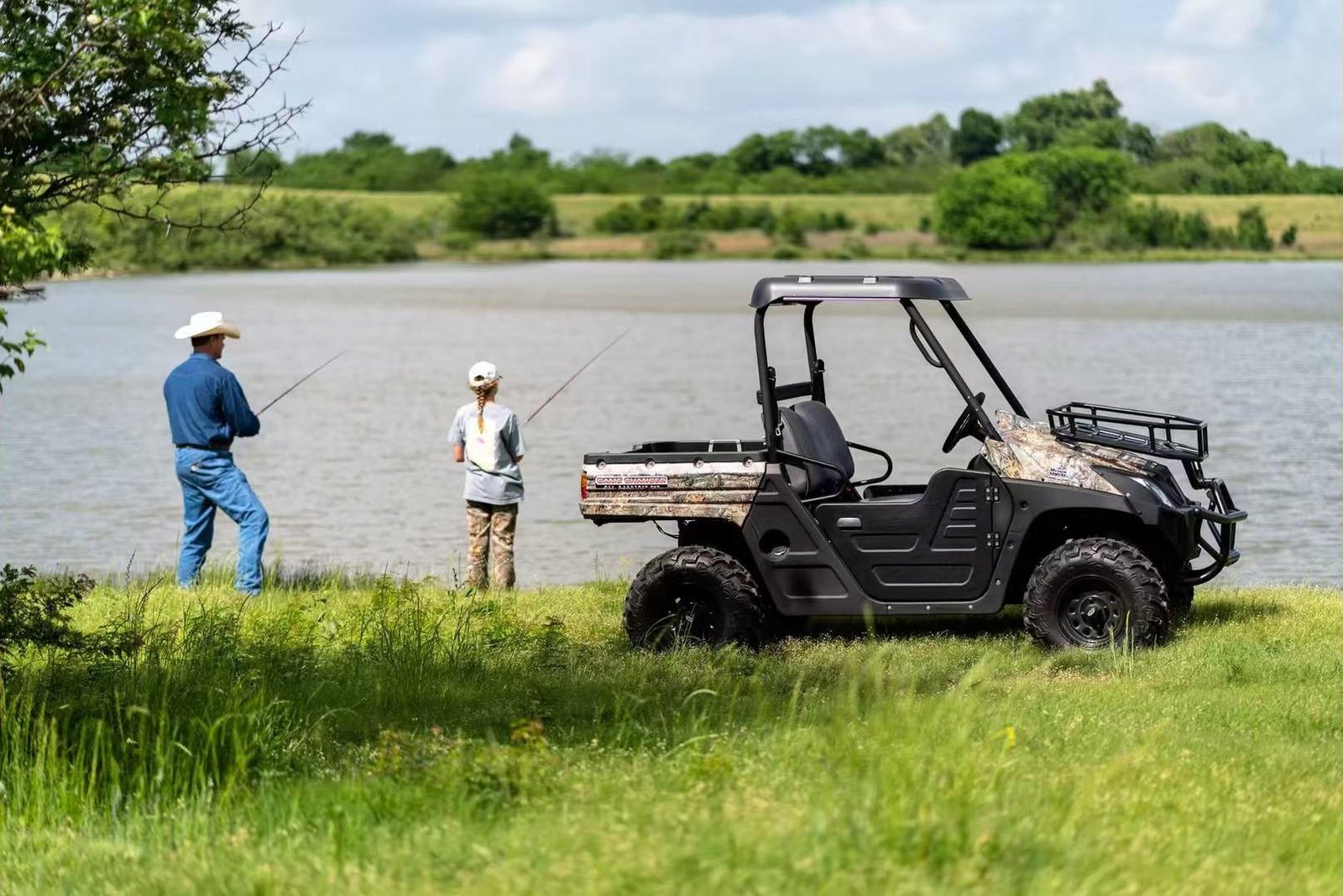
An ideal choice for outdoor sports and hunting clubs: The silent utility vehicle delivers high torque without disturbing the surrounding nature or wildlife.
I. The Rise of Electric UTVs: Ideal for Modern Farms and Eco-Patrols
Driven by the green energy transition and the boom in lithium-battery technology, the market share of electric UTVs in European and American commercial and agricultural procurement has risen sharply.
Zero Emissions and Environmental Compliance: Against the backdrop of increasingly stringent environmental regulations in Europe and the US, many national parks, eco-reserves, and large-scale indoor/semi-indoor agricultural bases impose strict limits on exhaust emissions. Delivering true zero emissions, electric vehicles serve as a “passport” into these high-standard green markets.
Silent Operation & Instant Torque: This is a performance breakthrough that traditional gas models cannot match. The high-power motor of an electric UTV unleashes maximum torque instantaneously, allowing it to navigate muddy terrain or low-speed steep climbs with ease. More importantly, its silent operation is an absolute must-have for hunting enthusiasts and daily patrols in upscale scenic spots, equestrian centers, and resorts—ensuring they never disturb wildlife or guests.
Low Maintenance Costs: Electric models completely eliminate the engine, transmission, spark plugs, and fuel system. This means buyers no longer need to worry about frequent oil changes, filter replacements, or complex mechanical troubleshooting. For corporate fleets (fleet procurement), this drastically reduces the Total Cost of Ownership (TCO).
II. The Hardcore Power of Gas Powered UTVs: Traditional King of Long-Distance Off-Road and Heavy-Duty Tasks
While electrification is an irreversible trend, traditional “Gas Powered UTV” (such as 800cc and 1000cc “High-Displacement Side by Side“ models) still hold an unshakable position among western riders and specific heavy-duty industrial sectors.
Unlimited Range & Fast Refueling: In the vast wilderness of North America, off-grid mines, or multi-day off-road cross-country racing events, the advantage of gas UTVs is clear. Refueling takes just a few minutes, allowing operators to get back on the trail immediately without any of the range anxiety associated with electric alternatives.
Extreme Climate Adaptability: In freezing regions like Northern Europe and Canada, low temperatures present a natural challenge to lithium-battery range and discharge efficiency. In contrast, gas engines maintain a highly robust performance and thermal efficiency under extremely low temperatures or prolonged, continuous heavy-duty workloads.
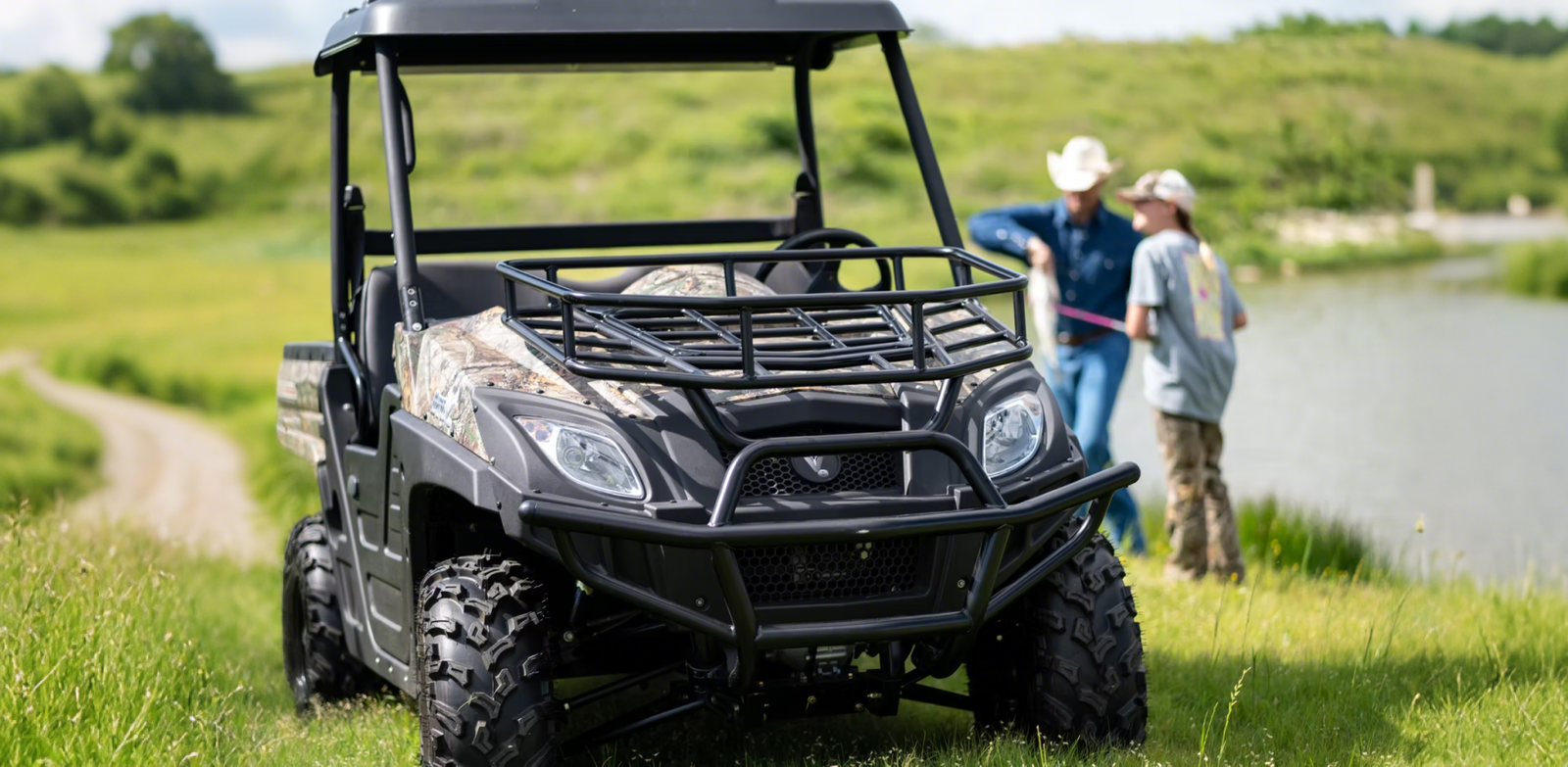
Versatile performance on soft terrain: Equipped with reliable traction control and UTV differential locks to prevent wheel idling on lakeside grass.
III. Core Configurations That Win the Market: Drivetrain and Chassis Architecture
Whether choosing electric or gas, premium Euro and US B2B buyers pay closest attention to the chassis specifications, which dictate “Off-Road Utility Vehicle“ capability and safety:
1. Dual A-Arm Independent Suspension
An exceptional suspension system dictates how a vehicle behaves on rugged mountain trails and rocky creek beds. The dual A-arm independent suspension ensures that all four wheels articulate independently. This design achieves optimal camber control, maximizing the tire contact patch during sharp turns or violent bumps, filtering high-frequency vibrations while providing ultimate ride comfort and heavy load-bearing capacity.
2. UTV Differential Locks
This is the soul of all-terrain vehicle trapped escape capability. Traditional open differentials lose all traction when a single wheel experiences idling or slipping. Equipping a vehicle with selectable, lockable front and rear differential locks ensures that torque is distributed evenly to all wheels, enabling the vehicle to successfully break free from deep mud, wet grass, or sand dunes under its own power.
IV. Summary: Fleet Procurement & Independent Site Selection Recommendations
As foreign trade decision-makers and distributors, you can achieve excellent results in the Euro and US markets by adopting a scenario-based sales strategy:
Recommend the “Electric UTV for Farm” lineup to:Farm/ranch operators, golf courses, premium resorts, eco-industrial parks, hunting clubs, and modern green riders looking for advanced tech, a “Silent Utility Vehicle”, and low maintenance via a “Lithium-Battery Side by Side“.
Recommend the “Gas Powered UTV” lineup to: Hardcore off-road enthusiasts, commercial mining/heavy industrial transport fleets, operators in remote off-grid regions, and mechanical purists who prefer the traditional roar of a “High-Displacement Side by Side” as their go-to “Off-Road Utility Vehicle“.