2026 Crossover UTV Buyer’s Guide: Balancing Heavy-Duty Work & Trails
Introduction: The Global UTV Market Paradigm Shift
The global utility terrain vehicle market is undergoing a profound paradigm shift. For years, commercial purchasers, property managers, and agricultural users had to choose between one of two distinctly polarized machines: either a slow, heavy-duty “workhorse” utility vehicle solely capable of hauling gravel and feed, or a high-clearance, high-horsepower sporting side-by-side intended solely for plowing through sand dunes and mountain trails. Modern business demands, complex property management requirements, and ever-increasing fleet logistics, however, dictate a greater need for versatility. Herein lies the need for the Crossover UTV. At the zenith of modern mechanical adaptability sits the crossover side-by-side, offering the robustness needed for day-to-day production during the workweek, while also providing the agility, superior suspension refinement, and trail prowess desired on a weekend.
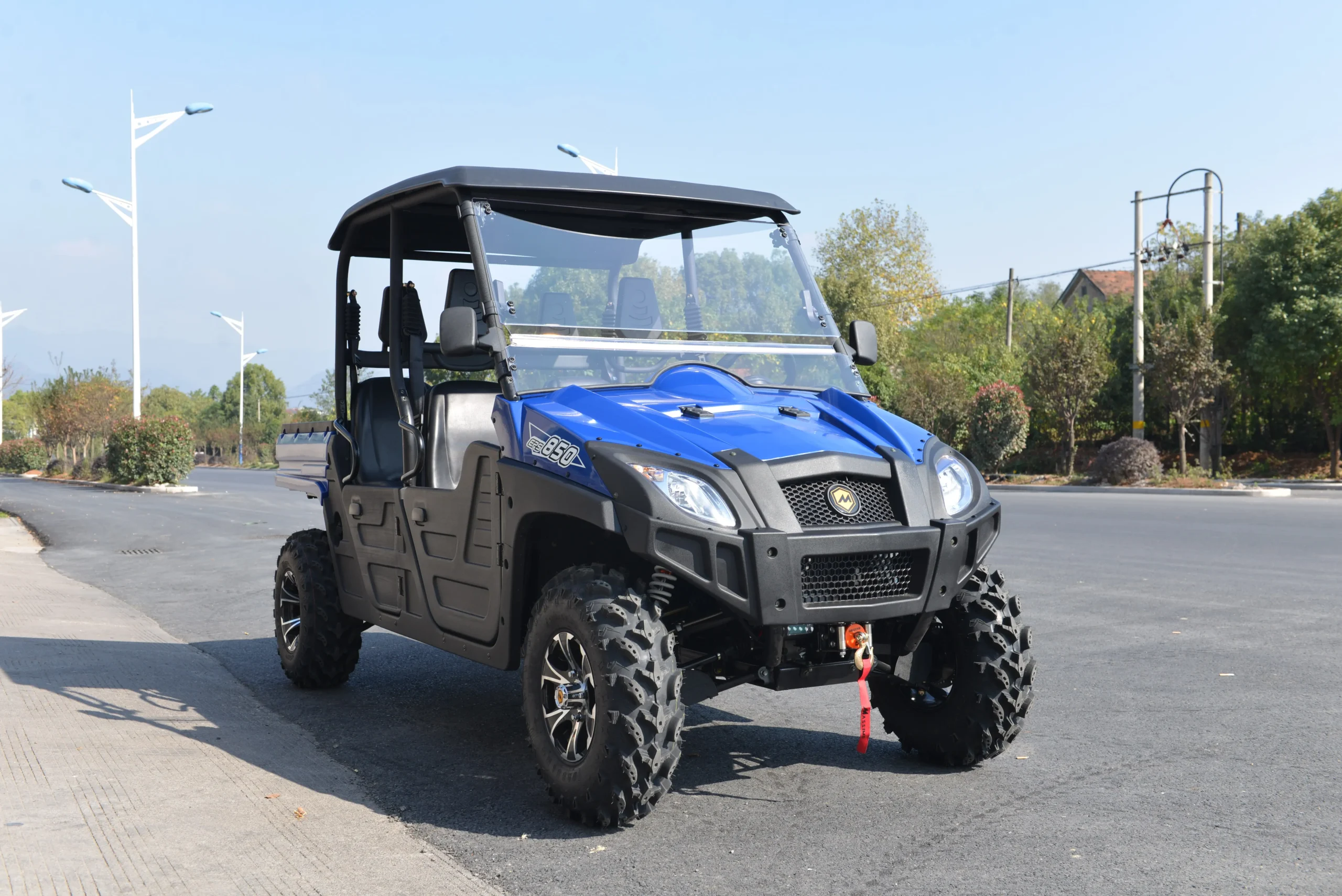
A versatile crossover side-by-side designed with advanced independent suspension for high stability under heavy payload.
1. Defining the Crossover UTV: The Industrial Multi-Tool
High-Frequency SEO Keywords: Crossover side-by-side, Commercial crossover UTV, Independent suspension system, Utility vehicles for business
Reduced Fleet Maintenance Costs: Eliminates the necessity of maintaining two distinct fleets (one for industrial work and another for perimeter patrolling, backcountry scouting, or recreational trail use), achieving the ultimate goal of utilizing one vehicle for multiple purposes.
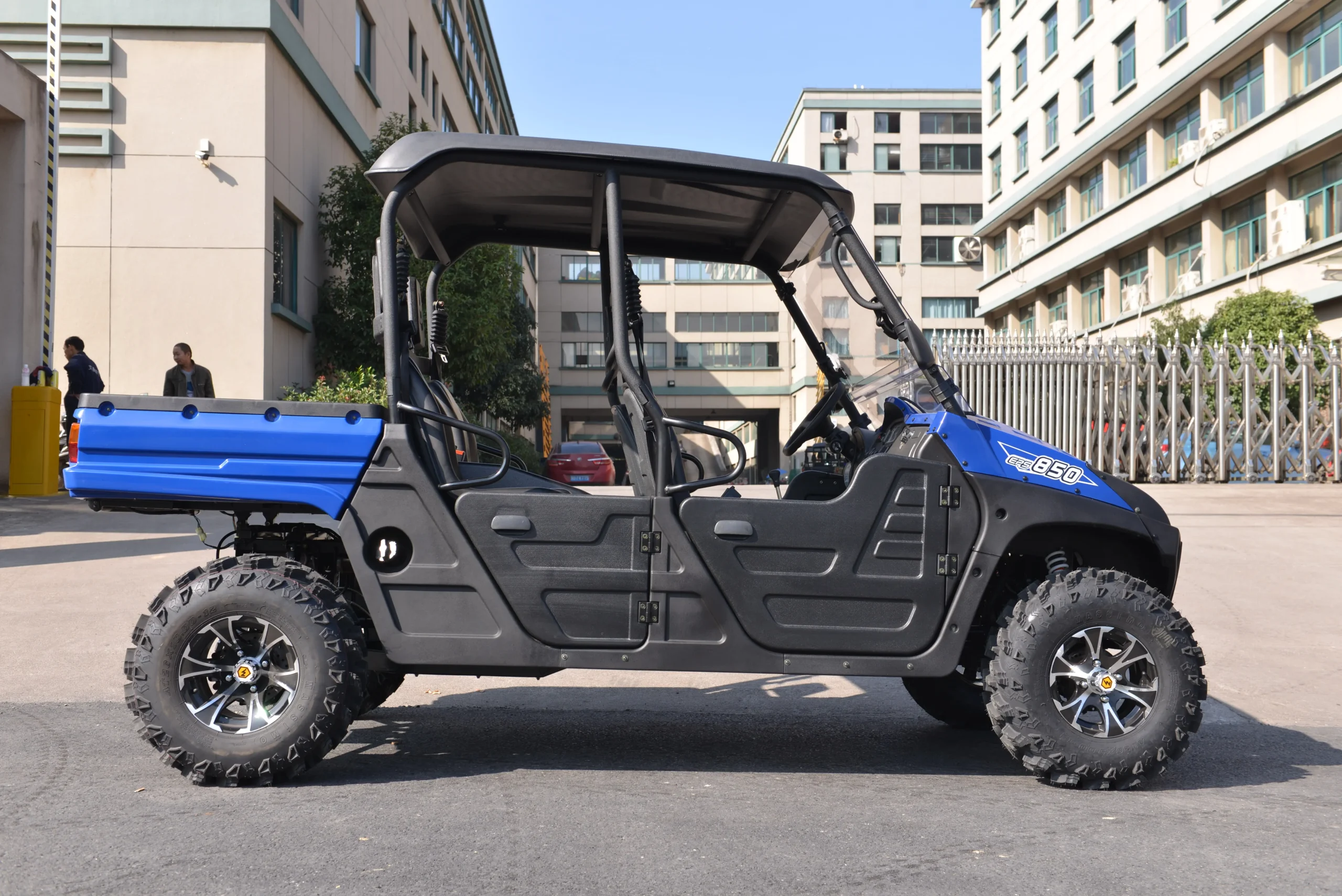
A powerful crossover side-by-side featuring a dual-walled cargo box and high towing capacity for industrial logistics.
2. Advanced Suspension Mechanics: The Power of the Double A-Arm
High-Frequency SEO Keywords: Double A-arm independent suspension, Off-road vehicle suspension design, Chassis stability under payload, UTV ground clearance
Technical Advantage: Provides a much wider range of camber, caster, and track width adjustment during the compression and extension phases of a wheel’s path than any alternative suspension design.
Traction Optimization: When taking on large obstacles like boulders, ravines, and logs, the upper and lower control arms articulate smoothly and in perfect concert to maximize increased surface contact at the tire and keep the rubber firmly on the ground.
2.2 Why Constant Tire-to-Ground Contact Matters for Business Applications
Keeping all four wheels firmly on the ground offers far more than just a comfortable ride; it is a critical component in achieving the efficiency required to get business done:
Stable Handling on Incline/Decline: When traversing steep inclines, particularly in sandy or muddy conditions, there is very little traction when even one wheel loses constant tire-to-ground contact. Double A-arms allow one wheel to drop down into a depression and the opposite wheel to climb a raised obstacle simultaneously, allowing for steady forward motion without spinning out.
Increased Payload Stability: A substantial change to a vehicle’s center of gravity occurs when you increase the load on a cargo bed up to its half-ton maximum capacity. Primitive suspension systems are forced into extreme camber deflection under load, resulting in steering wander or wheel shake. Dual independent control arms maintain geometric stability and drasticallyreduce camber shift.
Land Management & Less Ground Impact: In higher-end turf or resort-based property management, it is crucial that the terrain remain intact. Double A-arm suspension systems maintain their intended trajectory on rough terrain withsignificantly less ground tearing compared to primitive solid axles.
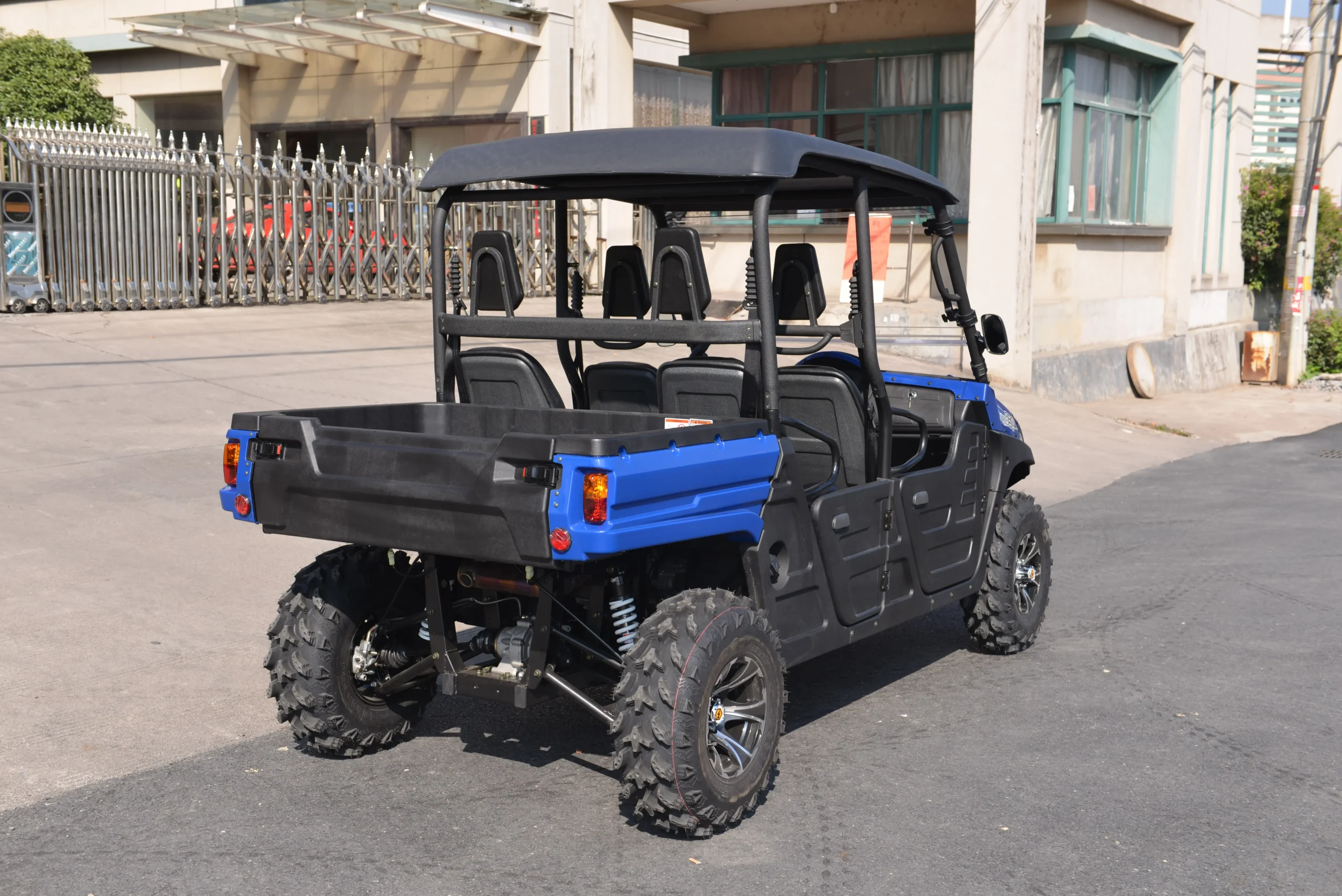
ear cargo bed architecture on a premium crossover side-by-side designed with an assisted dumping system.
3. Powering the Workflow: The Transition to Electric Utility Vehicles
High-Frequency SEO Keywords: Electric utility vehicle, EV UTV fleet, Maximum torque at 0 RPM, Whisper-quiet operations side by side
3.1 Torque Advantage: The Power of Electric
The Disadvantage of Gas ICE: A standard gas-fueled internal combustion engine (ICE) must achieve a high RPM (typically between 3,500 and 5,000) before its most beneficial torque rating can be accessed.
3.2 Whisper-Quiet Operations and Enterprise Use Cases
Loud gasoline and diesel engines restrict business operations to daylight hours, generating high-decibel noise and harsh vibrations. Thewhisper-quiet operations of an electric crossover completely overcome these operational limitations:
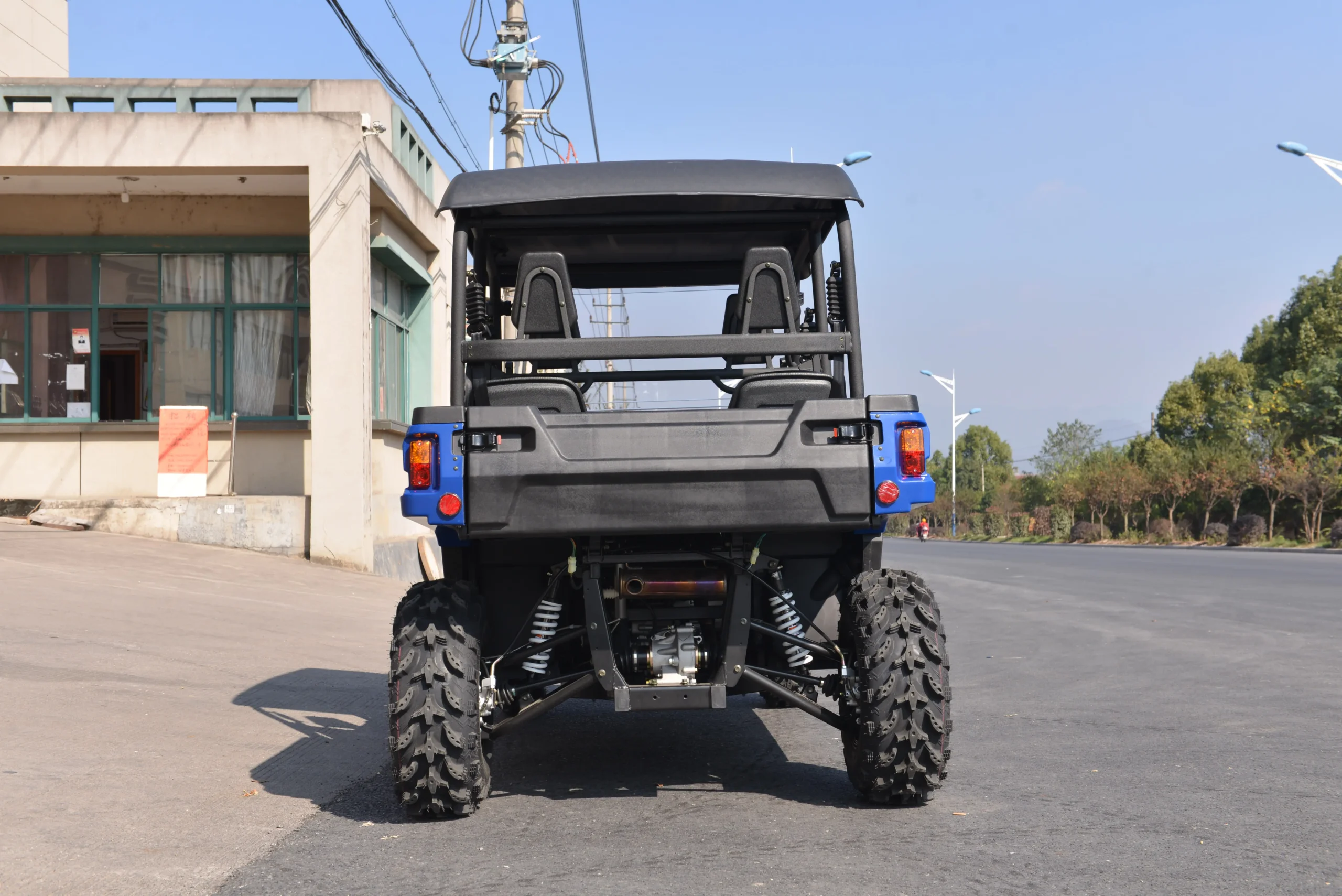
The symmetrical double A-arm independent suspension setup provides maximum traction and chassis stability under payload.
4. Work Capacity: Cargo Beds, Self-Dumping Mechanisms, and Towing
High-Frequency SEO Keywords: Heavy-duty UTV cargo bed, Assisted dumping systems side by side, UTV tow capacity, Commercial utility vehicles
4.1 Heavy-Duty Cargo Bed Structure
Unlike entry-level recreational machines equipped with basic, thin plastic beds, the rear cargo bed of a premium commercial crossover is engineered to withstand severe wear and tear from hauling concrete blocks, crushed stone, sharp tools, and chemical fertilizers. It features dual-walled plastic/composite designs or integrated metal frames.
4.2 Assisted Dumping Systems
Manually dumping a cargo bed loaded with 800 pounds of dirt, mulch, or gravel is highly inefficient and poses a severe workplace injury risk (ergonomic hazard).